Showing posts with label Health. Show all posts

Friday, March 06, 2009

Don't

Just found this on youtube. It is a novel and simple HIV/AIDS video. I think its a really good one. I hope it does effectr some people


Reblog this post [with Zemanta]

I am annoyed! - Gov't to cut Sucide Funds

I just read a piece on Irishhealth.com that points out the the Government are to cut funds to the National Office for Suicide Prevention by 12.5%. The cuts will come to funds availible to mental health support groups.

This is a terrible time for this. Mental Health is underfunded in this country and the fact that the government is to do this is highly annoying. This is aswell a highly stressful time for people with job losses and wage cuts and higher taxes meaning people are under pressure and things will only get worse.

According to Dan Neville TD, the Fine Gael Spokesperson with special responsibility for mental health said

Research into suicide since the 1890s shows that there is an increase in suicide rates and mental illness during times of economic recession. The Minister for Health and the HSE should be responding to this need in the present economic crisis. They are doing the opposite and justifying it on the back of saving a relatively small amount of money


He hits the nail on the head when he says "Government cutbacks in this area at a time of financial crisis amounted to a decision to save money at the expense of lives."

It is well known and documented that suicide rates increase during recessions, especially if foreclosures are on the increase. As deputy Neville says,

The high rate and threat of home foreclosures is of concern. For most Irish, our homes are our primary investment and the locus of our identities and social support systems. When combined with the loss of employment, home loss or the threat of home loss, has been found to be one of the most common economic strains associated with suicides


Rising unemployment will see a rise in suicide rates, that is a well known and documented fact. Deputy Neville points out the Kelleher/Daly Cork Study in the 1980s, in which two thirds of the men who took their life, were out of work at the time.

As usual the Government will blame the economic crisis for all this, but just like the attempted cut in the disability area in the budget was reversed because of the paltry savings, this should be reversed aswell!


Reblog this post [with Zemanta]

Monday, January 12, 2009

Organ Donation

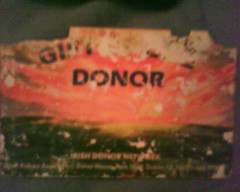
Organd Donor Card (Battered)Image by stephen.spillane via FlickrThe Department of Health and Children are currently holding a public consultation on the issue of Consent for the Donation of Organs after Death for Transplantation. The consultation sets out three basic ways of how organ donation could be done in Ireland. They are:

A) Opt-out (presumed consent)
The person is presumed to have consented to donate his or her organs after death unless he or she has specified otherwise.

B) Opt-in (explicit consent)

The person can decide in advance to consent to donate his or her organs, or to nominate someone to make the decision on his/her behalf after death. Where the deceased has not made a decision his or her family may do so.

C) Mandated choice and required request
People would be required by law to specify whether or not they wish to donate their organs after death. This could be done at specified times such as when applying for a State service or benefit. The provision of the service or benefit would not be dependent on the choice made. If a person is a potential organ donor, “required request” means that the person’s wishes, or their family’s, must be ascertained before death, for example in a hospital A & E Department or Intensive Care Unit.


The more detailed PDF document breaks down these options to in total 10 options. They are

A1) Hard opt‐out system (without exemption)
Doctors can remove organs from every adult who dies –unless a person has registered to opt out. This applies even if relatives know that the deceased would object to donation but had failed to register during life. A country that uses this system is Austria.

A2) Hard opt‐out system (with provision for exemptions)
Doctors can remove organs from every adult who dies –unless a person has registered to opt out OR the person belongs to a group that is defined in law as being against an opt‐out system. Singapore uses this system where Muslims chose to opt out as a group.

A3) Soft opt‐out (without family consultation)
Doctors can remove organs from every adult who dies –unless a person has registered to opt out OR the person’s relatives tell doctors not to take organs. It is up to the relatives to tell the doctors because the doctors may not ask them. Belgium uses this system.

A4) Soft opt‐out (with family consultation)
Doctors can remove organs from every adult who dies –unless a person has registered to opt out. It is good practice for doctors to ask the relatives for their agreement at the time of death. Spain is an example of this system

B1) Soft opt‐in system (with family veto)
Doctors can remove organs from adults who have opted in. It is up to each person to decide if they want to opt in. It is normal practice to let relatives know if the person has opted in and doctors will not proceed if faced with opposition from relatives. This is the system currently used in Ireland

B2) Soft opt‐in system (with family consultation)
Doctors can remove organs from adults who have opted in. It is up to each person to decide if they want to opt in. It is normal practice to let relatives know if the person has opted in and doctors can decide not to proceed if faced with opposition from relatives, although they have the legal entitlement to proceed according to the individual’s wishes. This is the system used in the UK.

B3) Hard opt‐in system (without family consultation)
Doctors can remove organs from adults who have opted in. It is up to each person to decide if they want to opt in. Relatives are not able to oppose the person’s wishes.

C1) Soft mandated choice system
People are asked to register their choice to opt in or opt out at specified points and CAN choose whether to do so or not.

C2) Hard mandated choice system
People are asked to register their choice to opt in or opt out at specified points and MUST choose one option.

C3) Required Request
A system of required request would require that a person’s wishes MUST be determined before death. Potential donors are identified in hospital Accident and Emergency Departments and Intensive Care Units and the individual or his / her family must be approached and their wishes in relation to organ donation determined.

The picture above is my Organ Donor Card. It is a bit battered but it shows how long, I have had it. Both my parents know I want to be an organ donor, in the event of my death. I think it is about time the Irish Government had a look at how the system works in Ireland.

So what is my preffered option? I personally am in favour of an opt-out one. I am not sure of which one though. Im not sure about the soft opt-outs (A3 and A4) as the family being asked at the time of death can be hard for them to deal with. So of the two that is left I would probably pick A1. Mainly because I cannot think of any major group in Ireland wanting to opt-out. Individuals can opt out themselves.

The Opt-in ones have proven they dont really work here. Organ donation is low, which is a huge pity. I know there is a part of the drivers license about Organ Donation, but I also know that many people forget to sign it.

With the madated system, I dont see how that can work well. Can you imagine the Nurse taking your details as you enter A&E, Do you wish to become an Organ Donor? Not exactly as nice question to be asked going into hospital.

Which do you think would work? Let the Government know! Written responses by individuals, groups or organisations are welcome and should be sent by e-mail to: tissue_legislation@health.gov.ie or posted to: Tissue Legislation Consultation, Department of Health & Children, R. 324, Hawkins House, Hawkins Street, Dublin 2.

Latest date for receipt of responses is 28th February 2009.

There is a list of questions to help with your response. I will be working on my proper one during the week and I will post it here aswell.


Reblog this post [with Zemanta]

Sunday, December 21, 2008

Sign the HPV Cancer Vaccination Petition

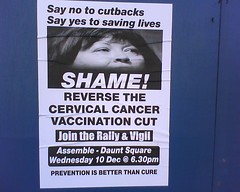
Poster for @redmum's protest in corkImage by stephen.spillane via FlickrI got an email informing me that the petition on the Cervical Cncer Vaccine is being closed on Chritmas Eve to be printed and sent to the Government. Please, if you get the chance to sign the petition, please do. It only takes a few moments and time is running out.

Reblog this post [with Zemanta]

Wednesday, June 04, 2008

They Lied to us!

Shingles! I was always told that you could only get Shingles if you didn't have the Chicken Pox, well they lied! You can only get Shingles if you have had Chicken Pox! from the VHI website

Shingles, also called herpes zoster, is caused by the herpes varicella zoster virus, which also causes chickenpox. When a person recovers from chickenpox, the virus lies dormant in their nerve cells and can be triggered later in life to cause shingles.


Yes thats right, if you have had Chicken Pox there is a 20% chance that you will develop Shingles later in life. Thankfully its not contagious, if you have had Chicken Pox, as that's all you can catch from it.

You learn something new everyday. This is mine today!

For those wondering, this came up in conversation with a friend who was today diagnosed with Shingles, luckily I have had Chicken Pox so I have nothing to worry about, unless I'm in the that 20% also...

Saturday, March 22, 2008

Last post, actions to follow up

While writing my last post, I decided whats the point it just writing the post if I dont do anything about it. So what will I do.

1. Email both the Minister for Health and Children (Mary Harney TD) and Minister of State with responsibility for Disability and Mental Health (Dr. Jimmy Devins TD). When and if I get a response, I will post them.

2. Email my local TD's and Senators Cork South Central TDs: Micheál Martin FF, Michael McGrath FF, Deirdre Clune FG, Ciarán Lynch LAB and Simon Coveney FG. Senator Jerry Buttimer FG. Any other suggestions?

3. Write a petition. Done and its online here Please sign it.

I wonder which will get the quickest resposnes.

Stay tuned....

Government set to abandon "A Vision for Change"

Yet another example of Bertie and crew changing their tune. This time its on Mental health policy. I received this from the Fine Gael Spokesman on Mental Health, Dan Neville TD. It says and I quote


"This report (A Vision for Change) states explicitly that a minimum of an additional €25 million is required annually for a six-year period to allow implementation of the mental health service expansion and improvement objectives outlined in the policy.

"In 2006, €17 million and in 2007, €10 million was spent for this purpose. In 2008 no additional funding was allocated.


It is fairly obvious that the Government is not willing to fund the Vision for Change. This report by an expert group, was an excellent report when released in 2006 and if the Government had fully implemented it, Ireland's Mental Health Policy and institutions would be up with the best of them, but they are not.

To again quote Mr. Neville

In 2006, 3,000 children and adolescents waited an average of 15 months for psychiatric assessment with some families waiting as long as four years. In 2007, waiting lists were even longer with 3,598 children waiting for assessment, a third of whom waited for more than 12 months. With no money allocated for the implementation of 'A Vision of Change' in 2008, things are likely to get worse.


Clearly the Government is going blind on this issue. With waiting lists going up, it cannot afford to be putting childrens and adolescents psychiatry on the long finger. This is what they are doing. They are closing there eyes and hoping it will go away.

Children and adolescents should not be in adult wards like they currently are. The Government need to allocate the funding to this sector which badly needs it!

------------------
Links:
A Vision For Change PDF
FG PR: Government abandons introduction of Mental Health Policy - Neville

Wednesday, February 27, 2008

In defence of Fine Gael

Its not very often I disagree with Damian Mulley, but I think in one of his latest posts "On why Fine Gael as a party can go fuck themselves", he's gone a bit wide of the mark.

Damian is currently being harrased by two people who claim to be FG'ers from UL. Now I am not doubting that this is the case, but I think Damian went a bit overbaord by throwing the entire Fine Gael party and organisation in the same bucket as these gobsheens.

Firstly, YFG is an autonmous organisation and you must apply seperately to join Fine Gael senior party.

Secondly, FG and YFG has no control over what indivual members do in their spare time and can only reprimand them when they misrepresent FG (or YFG)

I dont blame Damien for making his twitter private but lumping all blueshirts into one basket cause of two bad apples is a bit OTT.

I know and like Damien, I truely hope he follows trough with contacting the Gardai and the UL authorities about these two trouble makers.

Harassement, whether online or not, is not acceptable.

I had my own brush with this kind of thing from a student in UCC. Once the college authorities were contacted, it stopped.

I don't expect or want an apology from Damian, just hope in future he won't bandy all blueshirts into one label cause of two people.

I wish Damian the best and know this kind of stuff affects his health. I hope the blog awards will without a hitch on Saturday.

Please Damian remeber some of us Blueshirts aren't half bad!

Monday, January 15, 2007

What is a 'tiger' kidnapping

I've been hear the words 'tiger' kidnapping alot lately (at first i thought a tiger had been kidnapped or something) but i looking it up i found the following defination, and it explains it perfectly for me!

tiger kidnapping n. the abduction or holding of a hostage to persuade another person to aid in a crime.


Source, Doubled-Tongued Dictionary

Well that is that one sorted.

Another word used alot in Greys Anatomy is "Candy Strppin'"

Heres what it is!

A candy striper was traditionally a young, female hospital volunteer; a concept that originated in the 1940s. The unique job title represented the candy cane look of the red and white-striped pinafores worn by the volunteers. Traditionally, the girls sewed their own pinafores. East Orange General Hospital in New Jersey claims to have started the first candy striper program in 1944.

During the 1950s and 60s, the popularity of candy stripers was widespread. In general, the goal of a candy striper was to make a patient's stay in the hospital more pleasant. Initially, a candy striper simply delivered mail or patient meals, but as nurses became overburdened, the volunteers took on additional duties. Now, a candy striper might help feed, or read to, a patient; assist as a patient is discharged; or deliver messages. Other duties include transporting book or video carts to patient rooms.

Much has changed in candy striping over the years. In the early years, the training to be a candy striper lasted months, but now most hospitals train the volunteers in a few days. Currently there are male candy stripers; although most hospitals have a higher percentage of young female volunteers than males. "Volunteer" is the more likely term used to refer to a candy striper nowadays, and the uniform is not likely the red and white jumper of years past.

Most hospitals accept volunteers aged 13-18 for candy striping. Hospital volunteers perform a variety of duties, which may include staffing reception areas and gift shops; filing documents; or transporting medical records, lab specimens, and drugs from unit to unit. A candy striper might also assist with cleaning duties in a hospital. In some instances, volunteers only complete clerical tasks, due to insurance liability.

A candy striper program is an excellent introduction to the field of health care. Students who are interested in the medical field often find volunteering or job shadowing at a hospital beneficial. The hospital arranges the volunteer's schedule and the candy striper reports to a volunteer coordinator, nurse or physician.

Most hospitals require potential candy stripers to complete an application and interview session, and to provide character references and parental consent to volunteer. Other requirements include a TB skin test and physical exam. Once a young applicant is accepted as a volunteer, he or she will likely be required to wear a uniform and ID badge, observe all medical center policies, and maintain excellent conduct.


Source, WiseGEEK


Any words you have that others mighten know?

Monday, January 08, 2007

Should smokers be refused surgery?


Last year a NHS primary care trust announced it would take smokers off waiting lists for surgery in an attempt to contain costs.

The BMJ have two very interesting articles on this.

On the Yes side; Matthew J Peters, associate professor, Department of Thoracic Medicine, Concord Repatriation General Hospital, Concord NSW 2139 Australia;
argues that denying operations is justified for specific conditions

On the No side; Leonard Glantz, professor of health law, bioethics, and human rights, Boston University School of Public Health, 715 Albany Street, Boston, MA 02118, USA; believes it is unacceptable discrimination

The Yes arguements

(Full Article)

Failure to quit smoking before certain elective procedures confers such clinical detriment that to proceed to surgery is ill judged.


Wow, straight off the bat, Peters sets out his opposition.

Smoking up to the time of any surgery increases cardiac and pulmonary complications, impairs tissue healing, and is associated with more infections and other complications at the surgical site. These adverse effects compromise the intended procedural outcomes and increase the costs of care.


This is a good reason, but I'm slow to support cost as an issue, as no cost should be spared in saving someones life.

Such a policy should be limited to procedures where the evidence of harm is strongest. These include plastic and reconstructive surgery and some orthopaedic surgery. A study of experimental sacral incisions of 12-18 mm found that infection occurred in 12% of smokers and 2% of non-smokers. Infection rates in smokers who had quit for four weeks were similar to those in non-smokers. In a study of wound and other complications after hip or knee arthroplasty, no smoker who quit developed a wound infection compared with 26% of ongoing smokers and 27% of those who simply reduced tobacco use. Overall complications were reduced to 10% in those who quit smoking compared with 44% in those who continued.


here, Peters has good reasoning for the refusal in surgery, but at the same time limits it to certain procedures.

With arthroplasty, some of the wound infections were limited to erythema, but 13% of smokers required re-operation because of infection. Such infections have been shown to prolong total hospital stay, double readmission rates, and quadruple costs of orthopaedic surgery. This represents a 38% increase in the direct cost of care for each smoker having surgery. In the arthroplasty study the intervention group had an average length of hospital stay of 14 rather than 11 days.


So in other words, you smoke and have an operation, you will be in hopsital longer. Again cost is being brought in, but dont smokers pay enough tax, so they deserve the treatment?

Increased use of hospital beds and associated costs mean less opportunity to treat other patients. Based on these data, five non-smokers could be operated on for the cost and bed use of four smokers and the non-smokers' surgical outcomes would be better. A well informed smoker, unwilling or unable to quit, might assume an increased risk for himself, but the decision is not his alone when it can indirectly affect others. Then, the community must involve itself.


Here the fact that 4 non-smokers could be treated in the time it takes to treat a smoker, Peters attempts to make it a community issue.

With surgery that is done for purely cosmetic purposes, the increase in the risk and consequences of wound infection or fat necrosis from smoking is unacceptable and surgery is illogical


Here I assume, the surgery is private as it is cosmetic, that the extra cost will be borne by the patient.

The No Arguments

(Full article)

One of the noblest things about the profession of medicine has been its single minded devotion to patients. Doctors routinely treat patients who are despised by the society in which they live—enemy troops, terrorists, murderers. Given this, it is astounding that doctors would question whether they should treat smokers.


Glentz is straigvht off with the hipocratic oath, seams to me he has the upper groud from the start due to this.

Tobacco companies used to win every lawsuit brought against them by diseased smokers because they successfully argued that smokers knowingly and voluntarily assumed the risks of smoking—if smokers do not want to incur the well known risks of smoking they should simply stop.

But the 1988 US Surgeon General's report on the addictive nature of cigarette smoking gave plaintiffs' lawyers a way to rebut this argument.1 Smokers could now be portrayed as enslaved by the tobacco companies and incapable of stopping smoking because of their addiction. As a result, smokers did not voluntarily incur the risk of smoking but rather did so involuntarily because of their addiction. It is not without some irony that surgeons who refuse to perform operations on patients unless they stop smoking make the same argument that cigarette companies used—if smokers don't want to incur the adverse effects of smoking, including refusal of surgery, they should quit.


wow, huge rubuking of surgeons here, comparing them with tobacco companies if they refuse to carry out surgery. He has a point though. Glentz refers to the Surgeon General's 1988 report which should also force the doctors to carry out these operations.


Assuming we can accurately determine who falls into the class of smoker (is it someone who smokes 40 cigarettes a day, 10 a day, or the occasional cigar?), the idea of doctors treating all smokers the same way runs directly counter to the practice of medicine. This requires an individualised evaluation of each patient to determine the appropriateness of a treatment regimen. Evidence exists that smokers are at an increased risk of postsurgical complications compared with non-smokers, and when smokers stop smoking before surgery their risks of complications decrease. But those same data show that most smokers who have surgery have no complications, and a policy denying all smokers access to surgical procedures arbitrarily denies beneficial treatment to those who would have had no complications.


Here Glentz realy goes in for the kill, how do you define a smoker? Some smokers wont get infections, so maybe you wont treat 4 non-smokers in the same time-frame

Withholding surgery from smokers also distorts the modern doctor-patient relationship, which is based on partnership. Doctors determine the risks and benefits of treatment, inform the patients of these facts, and patients then decide whether to incur the risks to gain the benefits. This applies equally to smokers and non-smokers. Doctors should certainly inform patients that they might reduce their risks of postsurgical complications if they stop smoking eight weeks before the procedure. There is every reason to believe many patients would follow their doctors' advice. The question is, "Should the price of not following the doctor's advice be the denial of beneficial surgery?" Should someone who was crippled by arthritic knee pain be denied surgery because she would knowingly and willingly take an increased risk of incurring postsurgical complications? If the decision whether to take an increased risk is not left to patients, they are likely to lie to their doctors about their smoking. This deception, of course, will make us unable to help smokers who wish to stop but fear the repercussions of disclosing their smoking to their doctors.


Most people value the doctor-patient relationship due to confidentiality etc, so if you cannot trust your doctor that he will operate on you because you are a smoker, why trust him?

An argument made to support the discriminatory non-treatment of smokers is that increased complications lead to additional expenditures that could be avoided if smokers would simply stop smoking. But why focus our cost saving concerns on smokers in the context of surgery? Do patients have a general obligation to get healthy as a condition of receiving treatment? Patients are not required to visit fitness clubs for eight weeks, lose 25 pounds, or take drugs to lower blood pressure before surgery.

Many non-smokers cost society large sums of money in health care because of activities they choose to take part in. "Baby boomers" in the United States lost 488 million days of productivity in 2002 because of sports injuries. From 1991-8 sports related injuries in this age group increased 33% and cost about $18.7bn (£9.6bn; 14bn) a year in medical costs alone.3 We could reduce healthcare expenditure by simply refusing to pay for treating any injuries related to voluntary participation in sports. Let them suffer their painful knee condition which is entirely their fault. Indeed, if we treat a sports injury that person is likely to risk incurring future costly sports injuries. But we don't even think this let alone suggest it.


Here is a great arguement for ignoring the cost arguement and i agree completely.

Discriminating against smokers has become an acceptable norm. Indeed, at least one group of authors who believe smokers should be refused surgery blithely admits that it is "overtly discriminatory."4 The suggestion that we should deprive smokers of surgery indicates that the medical and public health communities have created an underclass of people against whom discrimination is not only tolerated but encouraged. When the World Health Organization announced that it would no longer employ anyone who smokes, public health and medical communities did not respond to this act of blatant bigotry.5 6 Similarly, it is shameful for doctors to be willing to treat everybody but smokers in a society that is supposed to be pluralistic and tolerant. Depriving smokers of surgery that would clearly enhance their wellbeing is not just wrong—it is mean.


In the final paragraph Glentz puts the nail in the coffin. Discrimination. Though not mentioned, under Article 1 of Protocol no. 12 of the European Convention of Human Rights

1. The enjoyment of any right set forth by law shall be secured without discrimination on any ground such as sex, race, colour, language, religion, political or other opinion, national or social origin, association with a national minority, property, birth or other status.

2. No one shall be discriminated against by any public authority on any ground such as those mentioned in paragraph 1.

Source

The NHS is a public authority so therfore I assume that smoking would come under 'other status' as it is a choice, or addiction. It is not tested in the European Court of Human Rights but it would be an interesting case.

I think the No side wins this arguement. well its the side I agree with.

Thursday, December 07, 2006

Pressure groups give mixed reaction to Budget measures

Pressure groups working in a range of areas have given a mixed reaction to the Budget measures announced by Minister for Finance Brian Cowen yesterday.

The National Women's Council and the One Family support group for single parents both say they are unhappy with the lack of measures to make childcare more affordable.

Elsewhere, groups representing the elderly say they are disappointed with the increase in the old-age pension.

The Society of St Vincent de Paul has welcomed the pension increases, but says it is unhappy with the €4 increase in the fuel allowance for older people and low-income families.

The housing organisation Threshold has said an increase of €30 per year in the tax allowance for people renting their home is derisory and insulting given the high rents across the country.

The Irish Patients Association has also criticised the 25% increase in the cost of staying in a public hospital bed, saying it will push up insurance premiums by 5% to 6%.

The Irish Farmers Association says changes to stamp duty on farm land and support for bio-fuel crop growers make this year's Budget a positive one for its members.

The Irish Medical Organisation has welcomed the increase of 50c in the price of 20 cigarettes and the removal of cigarettes from the Consumer Price Index.

Elsewhere, business groups say they are worried that the significant increase in government spending runs the risk of fuelling inflation and the lack of measures to tackle energy costs.

However, they have welcomed provisions to encourage private investment in small businesses and changes in research and development tax credits.

The Irish Congress of Trade Unions, meanwhile, has welcomed moves to remove people on the minimum wage from the tax net, but says Mr Cowen should have done more to adjust tax credits and tax bands instead of reducing the higher rate of tax.

Tax experts say the changes that were introduced favour higher income earners and people on the average industrial wage will not be much better off as a result of the Budget.

Source: BudgetForum.com

FG Budget Reaction Part 1

Complete lack of childcare measures in Budget ‘07- Stanton

Fine Gael Social Affairs Spokesman, David Stanton TD, welcomed some of the increases in today's Budget but said that Minister Cowen missed major opportunities by all but ignoring childcare and once again, neglecting spouses who stay at home.

'There are few surprises in today's Budget but the lack of innovation from this Government, especially when it comes to childcare provision, is profoundly disappointing and highlights just how quickly the Government is running out of steam.

'While the introduction of some measures that Fine Gael has long been calling for, particularly pensions increase and providing a half-rate for carers, is welcome, major opportunities have been missed particularly in the areas of childcare, carers and child poverty.

Childcare
'The Government completely ignored childcare provision and, despite the massive increases in crèche costs that are coming in the New Year, the early childcare supplement will not be increased by one penny. Spouses who stay at home were similarly overlooked and there is nothing on after-school care.

'After 10 years in power, Fianna Fáil and the PDs have once again refused to implement any paid parental leave and families are further left behind as there is still absolutely no paternity leave. The increase in maternity leave cannot hide this.

'Increasing the income disregard for children to €15,000 will do little to encourage take -up as, once a childcare provider earns €15,001, they are liable to be taxed on the full out. Last year only 3% of all those eligible to apply for the tax relief refused to do so and it is clear that a similarly small take-up is expected this year.

Carers
'I warmly welcome the adoption of Fine Gael's policy of allowing carers receive the State pension along with a half payment of the Carer's Allowance. However, the 3,000 carers that are under 18 have, once again, been ignored in the Budget and with billions to spend, this is inexcusable.

Child Benefit and Child Poverty
'Increasing child benefit is welcome but the question has to be asked, how much benefit will €2.50 a week be to hard-pressed families. As admitted previously by the Government, adopting a second-tier payment targeted at child poverty is the most effective way of alleviating this social blight yet this was completely absent from the Budget.

'Today the Government showed a complete lack of imagination and their missed opportunities are to be rued by carers, all those who are involved in and use childcare and the thousands of children in poverty in Ireland.'


Budget 2007: no surprises, no imagination & no reform

Commenting on Budget 2007 today (Wednesday) Fine Gael Deputy Leader and Finance Spokesperson, Richard Bruton TD, has said it contains no surprises, shows no imagination, and won't bring any reform of how taxpayers' money is spent. It represents a Government running out of steam and out of ideas.

'The key issue here is not the Government's ability to spend, it is their ability to deliver decent public services. This is the Government's tenth year in power. In the last five years, Minister Cowen has raised and spent more than €258,000 million. But people are asking: why has a Government that made so many promises, which had so much money, still let down so many people who depended on them?

- We were promised an end to waiting lists. Instead still have hundreds of people on trolleys and thousands more on waiting lists;
- We were promised Zero Tolerance. Instead criminal gangs have got the upper hand;
- We were promised a Metro by 2007. Instead we have day-long congestion on the M50 and a bus service which has received no extra buses for five years;
- We were promised affordable homes in sustainable communities, but instead inept policy has abandoned first time buyers to hopeless lotteries and long commutes from distant green field sites where no facilities exist.

'This is the Government's ten year legacy. These are not the problems of success, they are the problems of failure: failure of vision, failure of courage, failure to plan, failure to reform, failure to manage.

'Fine Gael welcomes the measures in Budget 2007 to support small and medium sized enterprises, as well as the increased provisions for older people. However, this Budget will not help the hard-working families who are struggling with childcare costs, and are facing a 6% hike in VHI policies and higher fuel charges.

'And he missed a major opportunity to reform stamp duty which remains a major impediment to anyone trying to get on the housing ladder. Targeted reform of stamp duty as advocated by Fine Gael would have eased the burden facing first time buyers. Furthermore, the increases in mortgage tax announced by the Minister will be eaten up by rising interest rates, and taxpayers are still seeing no reform of how their money is being spent. This Budget has plenty to say about spending, but says little about its impact on the ground or at the frontline.

- Will it shorten A and E queues? No.
- Will it make our streets safer? No.
- Will it speed up traffic? No.'


Hundreds on trolleys, thousands on waiting lists, no new thinking in Budget ‘07 – Twomey

Govt has ensured private health insurance will continue to rocket

Fine Gael Health Spokesperson, Dr Liam Twomey TD, has said Budget 2007 contains no new thinking on health and looks set to continue the Government's record of failing to deliver on their promises.

'This is now the tenth Budget from a Government that is out of ideas, out of imagination and clearly running out of steam. They have failed to end waiting lists with numbers heading for 29,000. They failed to deliver the 3,000 promised beds by more than two thirds. Already in the first few days of December numbers on trolleys in A&E have exceeded 200.

'This Government is addicted to stealth taxes and in this Budget the 25% increase in the cost of private beds in public hospitals will see private health insurance costs, which have already increased by 25% in the past two years, continue to rocket. On top of this the Health Minister herself has admitted that her private hospital plan will drive premiums up even more.

'While additional funds for long-term care and the provision for home care packages for elderly people are welcome, the long-term care package must recognise the shortage of inpatient beds for convalescence and rehabilitation which is leading to acute beds being occupied inappropriately. Failing to do will see the knock-on effects of hundreds of patients on trolleys and thousands of operations cancelled continue.

'I welcome the proposed increase in the subvention rate, which has remained untouched since 2001 despite significant increases in nursing home charges, however there is work to be done on qualifying criteria which see many elderly people who should be eligible turned down. I must wait for further details of the Health Minister's plans for the elderly but it is still my strong contention that the Government is pursuing a route that may see many forced to sell their homes to fund their nursing home care. It is deeply disappointing to see that there is nothing in today's Budget to ensure that the Leas Cross scandal is not repeated in Homes around the country.

'The proposals which Fine Gael has put forward would, at a relatively modest cost, have made a real difference to patients. In Government we will develop 15 Urgent Care Centres as an alternative to A and E and provide of 1,500 step down beds to free up acute beds. In contrast, this Government, after 10 years in power and approaching a cumulative spend of €70 million on health, produces a Budget with no new thinking, no imagination and a clear signal they are running out of steam.'

Budget overlooks vital psychological services in Education - Enright

- Real needs in Education overlooked in Budget
- No new ICT initiatives means Ireland's 'knowledge economy' will continue to be built on sand

Olwyn Enright TD, Fine Gael Spokesperson on Education and Science, has today (Wednesday) sharply criticised the Government for failing to use Budget 2007 to overhaul vital psychological services in the education system, and to underpin the ongoing development of Ireland's 'knowledge economy'.

Deputy Enright also commented that Government spending for 2007 will not address many of the endemic problems in the education sector because funding is neither being focussed at areas of real need, nor being accompanied by real reform. 'I am deeply disappointed that the Minister for Finance has completely overlooked education in his Budget 2007 speech, ignoring the monumental problems which our education system faces today.

'Earlier this week, I called on the Minister for Finance to prioritise two key areas within his budget. Firstly, 50% of primary schools are not covered by the National Educational Psychological Service (NEPS). An additional allocation of €5 million, on top of the amount set aside in the recently published estimates, would allow NEPS to provide a service to all schools. However, this issue has been overlooked once again, and thousands of primary school children will continue to fall outside the scope of this service next year.

'Secondly, it is simply disingenuous for the Government to pledge allegiance to the development of Ireland's 'knowledge economy' without backing up this commitment in a tangible way. The Government should have used Budget 2007 to ramp-up support for maths, science and ICT in the education system. No new initiatives in this area means that Ireland's 'knowledge economy' will continue to be built on sand.

'From 2002 to the end of 2007 more than €41.5 billion will have been spent on Ireland's education system, but this expenditure has not resulted in the type of radically improved education system that Irish children and young people deserve. A lack of focus, and a lack of reform, has characterised the approach of this Government to education spending:

- 30% of children from disadvantaged backgrounds still have serious literacy problems;
- Almost one in five young people leave school without a qualification;
- Many children with special needs, or psychological problems, are left behind in our system;
- An unacceptable number of buildings are substandard, with science labs, computer facilities and sports infrastructure being particularly poor;
- Absenteeism is rife, with 47,000 school children missing more than 20 days of school a year. This is equal to a full year of school over the primary cycle;
- 111,000 primary school children are in classes of 30 or more.

'This isn't just about spending money. Budget 2007 should have set out key priorities in education for the coming year, and funded them accordingly - priorities like improving literacy, keeping children in school, and equipping young people with the knowledge and the skills they will need as adults. Instead, education is overlooked, showing where the real priorities of this Government lie.'

Tuesday, December 05, 2006

O’Malley Must Go - Kenny

Enda Kenny told the Dáil (today) that he has no confidence in the Minister of State, Tim O'Malley, following the latter's comments on last night's Prime Time Investigates. He went on to call for the Taoiseach to seek Minister O'Malley's resignation over his handling of the services to patients with psychiatric illness and his grossly insensitive comments last night relating to waiting lists for such patients.

'Mental illness is devastating. It can tear families apart. That is why Fine Gael and Labour selected this issue as the first in a series of joint policy launches on the 5th of September this year. (See link to statement http://www.finegael.ie/news/index.cfm/type/details/nkey/29102/pkey/653/)

'Minister O'Malley's comments prove that he has no connection with those families. No warmth, no empathy, no understanding. He has had 4 ½ years to deliver services for the people that need them and he has failed to do so. Therefore, he is totally unsuited to the job. That is why the Taoiseach should seek his resignation.

'Mental illness is a private illness with very public consequences. When people's lives are collapsing around them, after ten years of FF and the PDs, they find they have no-one to turn to, nowhere to go. The Government has not addressed this crisis in ten years of record revenue. What makes anyone think they will do it in 15?

'The Minister is blaming everyone except himself. He is the Minister. The buck stops with him. Evading responsibility is now second nature to this dysfunctional Government. They have had nearly ten years in charge now. Six years ago the First Report of the Working Group on Child and Adolescent Psychiatric Services, set up by Minister Martin when he was Minister, said;

'It is recommended that a total of seven child and adolescent inpatient units for children ranging 6-16 should be developed throughout the country'

'Six years on and this commitment hasn't been delivered. Minister O'Malley has been in office for 4 ½ years of those 6 years and has clearly failed to deliver. This is in a period when the Government had booming tax revenues - €8,000 million more collected than expected in the last three years alone - and managed to throw money away on dud projects like PPARS, e-voting and the Bertie Bowl.

'Today there are 3,000 children waiting for psychiatric assessments with just 13 beds available to cater for their needs. In some cases these children are waiting for four and half years for an assessment - joining the waiting list at the time that Minister O'Malley took office. The HSE has clearly not substantiated Minister O'Malley's remarks about waiting lists and have left him isolated, save for the support of the Taoiseach who thinks Minister O'Malley is doing his best.

'Unfortunately, for patients with psychiatric illness Minister O'Malley clearly has no grasp or understanding of their circumstances. He may be doing his best, but his best falls miles short of what this under resourced and under appreciated sector needs. That is why he must go.'

Alternative Govt proposals for A&E should be adopted in Budget 07 - Twomey

Fine Gael Health and Children Spokesperson, Dr Liam Twomey TD, has said that if the Government is serious about making real improvements to the lot of patients in A&E it should adopt Fine Gael and Labour's proposals in its forthcoming Budget. Dr Twomey said that in particular the alternative Government was proposing investment in 1,500 step down facilities to free up acute beds and the development of 15 Urgent Care Centres to provide an alternative to A&E.

"This Government has consistently failed to make a difference to A&E because it has failed to recognise that bed capacity and the placing of patients in inappropriate beds is at its heart. The occupation of acute beds by patients who no longer need acute care creates the bottleneck that sees hundreds of patients on trolleys in A&E awaiting admission. Similarly the admission of these patients to day case beds when trolley numbers are high is leading to the wholesale cancellation of elective procedures, with recent figures showing 22,000 such operations cancelled across the country.

"Fine Gael, along with our colleagues in Labour, has proposed the provision of 1,500 step down beds with at least 600 in Dublin. These beds will be a mixture of convalescent beds for short duration stays, rehabilitation beds for intensive rehabilitation to improve the patient's quality of life and long-term continuous care beds. This measure will free up acute beds and relieve the pressure on A&E departments.

"In tandem with this and in recognition of the fact that 75% of patients who present at A&E do not actually require acute care we will provide an alternative to A&E through the development of 15 Urgent Care Centres, with three in Dublin. These centres, staffed by GPs, nurses and backup staff, will be open out of hours and treat relatively minor medical and surgical problems.

"Fine Gael's proposals are a prime example of the kind of joined-up thinking which is absent from the heart of this Government. That is why, after 10 years of power, billions spent and millions wasted, they will never succeed in making improvements by clinging to their own failed, bankrupt policies. Instead, they should adopt the cost-effective, commonsense measures proposed by Fine Gael and Labour."

Thursday, November 30, 2006

O'Neill comments echo FG policy, Govt incapable of putting patients first - Twomey

Fine Gael Health Spokesperson, Dr Liam Twomey TD, has welcomed the views of Professor Des O'Neill, author of the report on deaths in Leas Cross, and said that the thrust of his recommendations were represented in Fine Gael policy. Dr Twomey added that Government had failed to protect elderly patients because of the absence of robust policy at its heart.

"The horrors at Leas Cross happened, and could be happening in other nursing homes around the country, because of the failure of the Government and its agencies. It is the Government that failed to put in place a strong, independent inspectorate with the power to shut down bad nursing homes and continued to transfer vulnerable patients to homes that had bad reports. Now that these Government failings have come to light we are seeing panicky policy formation on the hoof, which will not deliver for patients, coupled with the trademark shirking of accountability.

"In health, just as in justice, Fine Gael's policies are being proved to be robust and effective. Just as the Law Reform Commission and the DPP have endorsed the party's justice policy so too Professor O'Neill's remarks support much of what we have put forward in health. In particular, Fine Gael along with the Labour party has committed to:

- A strong, independent Patient Safety Authority, which would oversee the registration and accreditation of hospital and inpatient facilities, set and monitor National Minimum Standards for health facilities and carry out annual inspections with published reports.
- The introduction of 'whistleblowers' legislation to protect health and social service workers who identify wrongdoing and want to blow the whistle.
- The provision of 1,500 step down beds with at least 600 in Dublin with the emphasis on rehabilitation and convalescence and a proportion of the beds being long-term care beds.

"Our policies will deliver because, in contrast to this self-serving, arrogant Government, they put patients at their centre. The lasting impression of the Government's response to the nursing home scandal will be one of complete inaction, able to quickly introduce legislation to charge elderly people but unable to move swiftly to prevent the abuse of our most vulnerable citizens. With regard to their future plans it is clear that this is a Government that is so out of touch with ordinary people that it is incapable of formulating policy with the care of patients at its heart."

Thursday, August 24, 2006

Casualty Figures

A great site here to see the number of people waiting for beds in Irish Hospitals. Found it on Damien Mulley's Blog

Monday, August 14, 2006

Scary Article: HIV threat to students on rise, says GPs

Irish Independent 13/08/2006

DOCTORS at Ireland's third-level colleges have admitted for the first time to treating HIV-positive students in their centres and have called on the Government to rethink its current sexual education policy, which is "failing and ineffective".

The news comes as a new sexual health survey conducted by Trinity College Dublin (TCD) of over 2,000 students obtained by the Sunday Independent showed that 51 per cent of students admitted to having a one-night stand and 58 per cent of those said they had more than one.

A separate UK study published last week revealed that the majority of sexually active teenagers were "mis-using" condoms, risking sexually transmitted infections (STIs) and unwanted pregnancies.

The admission that students within Irish colleges are HIV positive is, according to medical chiefs, merely a reflection of society in general.

According to Health Service Executive (HSE) figures, up until the end of 2005, there were 4,082 known cases of HIV infections in Ireland, but it is unclear how many of those are students.

Of the 318 HIV infections diagnosed last year, 159 of them were acquired through heterosexual contact. Of those 318 HIV positive cases, 28 were diagnosed with full-blown AIDS at the same time.

The TCD study was led by Dr David Thomas, Medical Director at the college's student health service, who told the Sunday Independent that treatment of HIV-positive students is nothing new but said thankfully the numbers of cases have not risen like those of other STIs.

The study's main findings were that alcohol played a big role in students' decisions to have a one-night stand, sexual education is failing drastically and there is still a taboo about carrying condoms, particularly among girls.

The report also found several "at-risk" groups, which are more likely to engage in risky sexual behaviour, often leading to the contraction of an STI. These at-risk students include those who move out of home when going to college, students who binge drink and those students who consume illicit drugs on a regular basis.

The college's social and human science students were found to be the most likely to have a one-night stand while engineering students having single-night encounters were most likely to use a condom.

A total of 44 per cent of those surveyed said they had used emergency contraception while over one in five have said they have used the morning after pill more than three times, which the report describes as "worrying".

Just under one in 10 of those surveyed said they had had an STI, with the female group totaling doubling from five to 10 per cent since 2002. Male homosexuals were found to be very diligent in the use of condoms during sex.

TCD carried out a similar study in 2002, which formed the basis of a Department of Health national survey conducted last year. Entitled the CLAN survey, the study found that the majority of students have had between one and three sexual partners, 71 per cent female and 58 per cent male; 14 per cent had four to five partners, while one in four men have had more than six sexual partners, significantly higher than females.

Dr Sandra Tighe, Medical Director at the UCD Student Health Centre which sees around 19,000 patients annually, said mass sexual education simply does not work whereas peer educationis found to work extremelyeffectively.

"These young adults need practical and hands-on guidance. Alcohol is another big factor in people's sexual behaviour. Our experience on the ground would tally with the report's findings."

It has emerged that the HSE is to give out a massive €165,000 worth of condoms free to prostitutes, gay men and drug addicts in a bid to curb STIs.

The tax-payer is footing the bill for the health-awareness campaign, which is to focus on prostitutes working the streets in Dublin and a city-centre gay men's project along with a number of addiction services.

www.unison.ie/irish_independent/stories.php3?ca=9&si=1669025&issue_id=14484

Wednesday, July 12, 2006

Public Health (Tobacco) Acts 2002 and 2004 Submission on comencement of Section 38 (1) of the Public Health Act 2002

Dear Sir/Madam,
I urge the Minister to commence Section 38 (1) of the Public Health (Tobacco) Act 2002 as soon as possible. As a student of Public Health in UCC, I am aware of the cost and damage that smoking causes. If the date proposed, Monday, 2 October 2006, is the earliest I ask that it be implemented then. This is an important measure that will deter people from smoking and make it harder for people to get addicted at a young age due to the cost factor.

Looking forward to hearing from you on this issue.

--
Is mise le meas
Stephen Spillane


Send your submission to tobaccoactsconsultations@health.irlgov.ie